Showing posts with label Asia: Malaysia. Show all posts

Saturday, February 25, 2012

Learning about nature and culture in Kota Kinabalu, Malaysia

Can you find Borneo on a map? It is a large island shared by three countries: Brunei, Indonesia and Malaysia. We visited Kota Kinabalu, the capital of the Malaysian state of Sabah. Borneo is known for its exotic wildlife, especially the orangutans.

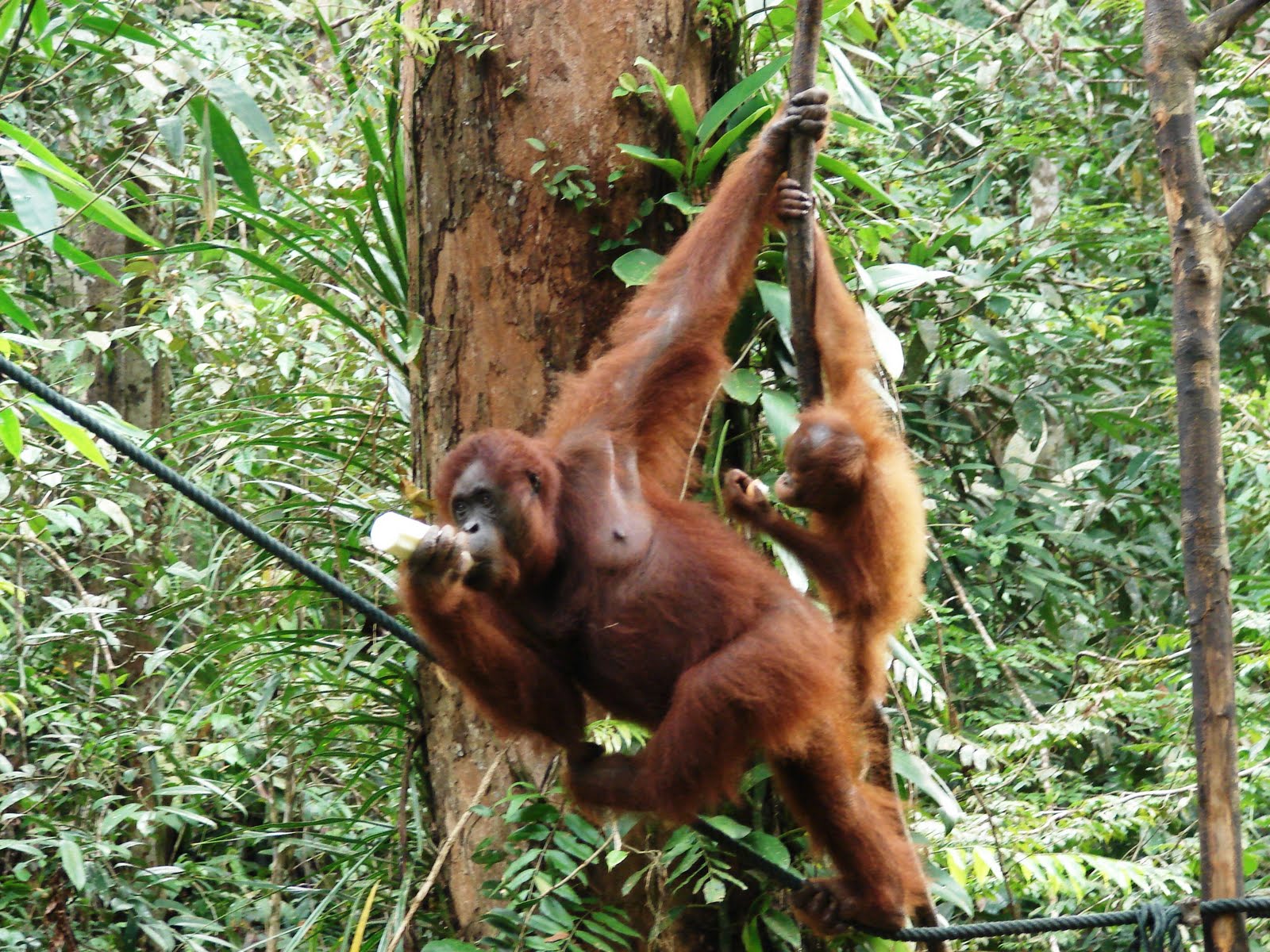
However as with wildlife the world over, Borneo finds it is necessary to protect its wild animals. The main orangutan rescue center in Sabah was a day trip from Kota Kinabalu so we went to the Shangri-la’s Rasa Ria Resort Nature Reserve where they have a variety of nature-related activities. The program, “In Search of the Orang Utan,” included information how they try to protect them and about the orangutan’s natural habitat. Orangutans eat leaves, barks, buds, stems, and fruit. One of the biggest threats to the orangutans is that their jungle home is being logged so there is less and less land for them to call home. Also, some people illegally catch them to sell them as pets often killing the mother so they can get the baby. A 15-minute jungle walk took us to the orangutans viewing and feeding platform. The orangutans are free to roam the jungle but they know when it is feeding time and where to get their food. The orangutans are being slowly introduced to the wild and learning how to survive. Most are around three years old and were rescued as infants. Either they were injured or they had no mother to take care of them. When they are about six they will be sent to a larger nature center in Sepilok. It was fun watching them. They are very human-like in their actions. The tour ended at the nursery where the babies are kept, bottle-fed, and trained until they are nearly three-years old. At that time they can fend for themselves with the other orangutans. The babies are not put with the older orangutans earlier because the older ones tend to play too rough. Wild long-tailed macaques also showed up to play and eat.

Kota Kinabalu is a busy city with malls, highways, and even Burger Kings. We wanted to learn about the various ethnic groups found in Sabah state and how they lived years ago so we visited Mari Mari Cultural Village.

The cultural village, high in the hills in the rainforest, consists of five traditional homes. Each group has its unique architectural style and special way of living. Visitors are greeted by guides in traditional outfits and learn about some of the traditions. We tried many things. For example: we learned how to shoot a dart from a blow pipe, how to make fire the traditional way, and prepared part of our lunch by putting chicken and vegetables in a banana leaf, rolling it up and slide it into a length of bamboo to be cooked. One of the highlights of the tour is the visit to the Murut Longhouse with a few skulls hanging from the ceiling, as the Muruts are one of the headhunter tribes in Sabah, and these skulls are simply handed down from generation to generation. In there longhouse there was a trampoline-like floor made of bamboo where the warriors get the floor bouncing and then one jumps up to grab a prize from the ceiling. Many visitors tried but they could not even stay upright. We also saw a cultural show of the traditional dances from the various groups. At the end of the tour we enjoyed a lunch that included the bamboo portion we prepared earlier.

Tuesday, March 22, 2011

Exploring the Malaysian part of Borneo

Borneo is the world’s third largest island after Greenland and New Guinea. Can you find all three on a map? Three countries call Borneo home: Brunei, two states of Malaysia, and a state of Indonesia. We visited the Malaysian state of Sarawak.

Orangutans live on Borneo. They are the largest of the arboreal mammals. Arboreal means they live in the trees. We went to visit the Semmenggoh Orang Utan Rehabilitation Center. The Center is a safe haven for injured and orphaned Orangutans that were rescued and are now learning how to live in the wild. The orangutans are free to move about the rainforest. They are fed each morning but not all of them show up because some have learned how to survive in the wild. Most of the ones who showed up have babies. The mothers grabbed the food, stuffed it in their mouth and then climbed higher and ate it. The staff has named them. One is called “Hot Mama” because the hair around her face is fancier than the others so she thinks she is more beautiful. Before she was rescued she had been mistreated; sometimes she gets angry and bites but not very often. Our guides, Azihari and David, told us that one of the abused orangutans became very attached to a volunteer helper from Europe. When it was time for the helper to return to Europe the orangutan must have sensed she was leaving because he became angry with the volunteer and then very sad. Orangutan’s emotions are a lot like ours.

The area has more than 40 different groups of people with their own language and lifestyle. We visited the Sarawak Cultural Village where they have built samples of seven typical native houses. When we arrived at the Village we got a passport. It was stamped in each of the homes we visited. We had already visited a real Bidayuh longhouse village near the orangutan center. The village is built on stilts with the houses connected by a walkway which is like a long, wide porch. Today in the Bidayuh longhouse they have TVs and other modern conveniences. One boy was playing with his Game Boy.

We visited several different homes in the cultural village. We had to climb a notched log to the get into the Iban house where women were making rice treats. At the Orang Ulu house the women were deep frying slices of tapioca root. They tasted like potato chips. There were macaques climbing on and around the house. In the Malay home we had to wait on the steps until we were invited in. Each house was different and very interesting.

At the Village they have a wonderful show of dances from the various groups. The dances tell the stories about their culture. The Iban dance showed the strength of the warrior as he lifts a large wooden board with his teeth. We were very impressed with the Penan boy’s skill with a blowpipe. Most impressive was the man of the Melanau tribe who balanced atop a bamboo pole while it is turned around and around. Our visit to the village was a wonderful way to learn about the people of Borneo.

We also visited the Cat Museum. The capital of Sarawak is Kuching, which means cat. It seems when the first foreigners arrived in the area they saw cats under a tree so now the city mascot is the cat. The museum had all sorts of cat books, statues and other information about cats.

Monday, March 30, 2009

Selamat from Melaka, Malaysia

Selamat is how we say "hello" in Malaysia. Malaysia is located between Thailand and Singapore. We took a bus from Singapore to Melaka, a port city in Malaysia. On the four-hour bus trip they showed a movie. We were surprised because it was an American movie in English. Melaka is a pretty city on the Straits of Melaka (also spelled Malacca). Because of its unique culture, UNESCO, which is a part of the United Nations, has declared it a place of special historical importance. The Portuguese, Dutch, British, Japanese, Indian, Arabs and Chinese traders have left their imprint on its culture.

In the center of the historic part of the city there are several brick-red buildings built by the Dutch settlers in the 1700s, including a beautiful church. A fun way to tour the city is in a brightly decorated trishaw. A trishaw is a bicycle with a sidecar where one or two people can sit. Another way to see the city is by taking a boat tour on the Melaka River. On the boat we made friends with Maddie. Just like Maddie, we liked it on the river because we saw many interesting sites and it was cooler. It is very hot and humid in Melaka.

There are many museums in Melaka including one about a Portuguese treasure ship that sank offshore and one dealing with kites but the most interesting one was The Museum of Enduring Beauty. What we saw was amazing. There were pictures of the ways people in other countries have decorated or changed their bodies to look beautiful. We saw pictures of people who had pierced their lips then inserted big objects in the hole so it looked like they had a plate on their bottom lip. Others had done the same thing with their ears. We decided it was like having pierced ears only more extreme. Others were images of people with a lot of tattoos but it didn’t seem so different because today many people have tattoos. It was very interesting even though some of the beauty treatments are no longer in practice. The objective of the museum is to help people realize that different cultures do things differently. People in different countries have different ideas of what is beautiful. Beauty is in the eye of the beholder.
When we went on a tour in a trishaw we stopped at several houses of worship and also at Mr. Sam’s Shoe Shop. His family has been making shoes for many generations. He showed us very tiny shoes, some only 4-inches long, made by his grandfather. Many years ago the Chinese thought that women with the smallest feet were the most beautiful so females would bind their feet to keep them small. It was painful and some ladies had feet so small they couldn’t walk. We remembered what we saw in The Museum of Enduring Beauty, and even though we are glad women don’t bind their feet any more, we understand that everyone wants to look beautiful.

When we finished sightseeing we went to the mall, which is just like the ones in America. We bought ice cream at Baskin Robbins and enjoyed watching the people. Most of the young people had on blue jeans and t-shirts but there were many different styles of dress including Indian saris, teenagers in short shorts, and others completely covered in a strict Moslem manner. People from many countries settled in Melaka and many have stayed true to their culture. We decided there are many ways to look attractive. That’s what makes the world so interesting.

Sunday, December 28, 2008

Selamat Detang from Malaysia

"Hello" is the common greeting in multi-cultural Malaysia. Many signs say Selamat Detang, which means "welcome." The capital of Malaysia is Kuala Lumpur, which most people call KL. KL had the tallest buildings in the world, the Petronas Towers, until Taipei 101 was completed last year. At 1,483 feet, they are still the tallest twin towers in the world. The double-decker Skybridge connects the towers at floors 41 and 42.

From KL we drove four hours to a jetty where we got on a boat and went three hours up river to Taman Negara National Park which they say is the oldest rainforest in the world - 130 million years old. We thought we were going to be roughing it but the resort on the edge of the park has about 100 cottages with air conditioning, which was good because it is very hot and humid in Malaysia, especially in Taman Negara. Even so we like the rainforest.


We went on several hikes and saw a lot of plants and insects, plus we learned what some of the plants can be used for. The members of the cat family, the wild elephants, and other big animals of the jungle have learned to stay away from people and mainly come out at night, but the monkeys and monitor lizards come into the resort area. Taman Negara has the world’s longest canopy walk - about 1500 feet long. A canopy walk is a walkway that hangs in a net high in the trees so people can see what it is like to be at the top of the rainforest. The walk was a bit scary. You can see us trying to decide who should go first. We had to stay 15 feet apart. The canopy walk actually goes from tree to tree and even had parts where we had to climb up a ladder. It was fun being up in the treetops. At night we went to a "hide" which is a room on stilts. It overlooks a waterhole and a natural salt lick where the bigger animals come at night. We saw samba deer.

Our favorite activity at Taman Negara was visiting the aborigines, or "Orang Asli," which means "original people" in the Malay language. They were the first human occupants of the Malay Peninsula. They continue to live a nomadic, hunter-gather lifestyle. They call themselves Batek. The Batek are gentle and shy. About 1000 Batek live in the park. Nomads don’t move every day but they move many times during the year. The group we visited had been in the same location for two weeks. The Malaysian government built them a school and houses but the Batek people want to keep living their way. They hunt and fish and make a little money by letting people visit their village. Instead of a permanent house they sleep in a lean-to covered with palm fronds and plastic.

It rained while we were there so we all sat on the mats in their "home" while one of the Batek showed us how they make fire without using matches and how he makes poison darts for his blow gun. The poison they use comes from the Ipoh tree. They hunt animals with a blowgun. A blowgun is very quiet so it doesn’t scare the animals away. In the "village" there were five families and about 20 people. When we first arrived the children hid behind their mothers but when we sat on the mat near them they smiled and came closer. Once a month the government sends a doctor to check on their health and give them medicine. Many of the children had coughs. We saw bottles of cough syrup but our guide said that as after the doctor leaves their take their own traditional medicine made from plants they find in the rainforest. We wonder how long they will be able to keep their old ways.
Malaysia is very interesting. It has the world’s tallest twin towers and the one of the oldest rainforests.